
What Hampton Roads Homeowners Need to Know Before Choosing an Irrigation System Installation
If you’re a homeowner in Hampton Roads weighing your irrigation options, you’ve probably wondered which system actually saves money over time. The answer isn’t as simple as picking the cheapest installation quote. Between Virginia’s humid summers, unpredictable rainfall, and increasingly common drought restrictions, the system you choose today will impact your wallet for years to come.
Drip irrigation and traditional sprinkler systems each have distinct cost profiles. Drip systems typically use 30 to 50 percent less water than spray sprinklers, which translates to real monthly savings on your utility bill, especially in water-metered communities across Tidewater Virginia. But drip installations often carry a higher upfront price tag. Sprinklers, on the other hand, may cost less initially but can rack up higher water bills and maintenance expenses down the road.
The total cost of ownership extends far beyond the installation invoice. In our experience working across the Virginia Peninsula, homeowners who focus solely on upfront costs often regret their choice within two to three seasons. Water bills during the peak irrigation months of June through September can swing by hundreds of dollars depending on which system is running your landscape. Add in repair calls, winterization expenses, and the hidden cost of replacing plants that didn’t receive the right amount of water, and the initial savings from a cheaper system evaporate quickly.
Virginia’s climate makes this decision even more critical. Our region experiences intense summer heat and humidity, which means traditional spray sprinklers lose significant water to evaporation, especially during afternoon watering cycles. At the same time, localities across Hampton Roads have implemented tiered water pricing and seasonal restrictions in response to drought conditions. In 2024 and 2025, several communities in Tidewater enforced mandatory odd-even watering schedules and prohibited daytime irrigation during peak summer weeks. Homeowners with inefficient systems not only paid more per gallon but also struggled to keep landscapes healthy under restricted watering windows.
This guide breaks down the real numbers behind both systems so you can make an informed decision based on your landscape, budget, and long-term goals. We’ll cover installation costs, ongoing water expenses, maintenance and repair realities, and when each system makes the most financial sense for properties throughout the region. Whether you’re planning a new landscape installation or considering an upgrade to your existing setup, understanding these cost differences will help you invest wisely.
At Irrigation Solutions, LLC, we install and maintain both drip irrigation and sprinkler systems throughout Hampton Roads, and we’ve seen firsthand how the right system can cut water costs in half while keeping landscapes healthier. We provide site-specific assessments and transparent cost estimates so homeowners get the system that truly fits their property and budget. If you’re ready to explore your options, our team can walk you through the pros and cons of each approach based on your specific landscape needs and help you determine which system delivers the best return on investment.
Irrigation System Installation Costs: What to Expect in Hampton Roads
The first number most homeowners see is the installation quote, and it varies considerably between drip and sprinkler systems depending on your property size and landscape complexity.
For a typical quarter-acre lot in Newport News or Virginia Beach, a conventional sprinkler system installation generally runs between $2,500 and $4,500. This includes the controller, valves, PVC piping, sprinkler heads, and labor. Larger properties or designs requiring multiple zones and upgraded controllers (like smart, weather-based models) can push costs to $6,000 or higher.
Drip irrigation systems often start at a higher price point, typically between $3,000 and $5,500 for comparable coverage of garden beds, shrubs, and foundation plantings. The reason: drip requires more precise planning, additional emitters and tubing per plant, and finer filtration to prevent clogging. A full-property drip system covering both turf and plantings can exceed $7,000, though most homeowners use a hybrid approach (sprinklers for lawn, drip for beds) to balance cost and performance.
Several factors drive installation costs higher for both systems. Sloped terrain, mature tree roots, rocky soil common in parts of Gloucester and West Point, and the need to retrofit around existing hardscapes all add labor hours. Larger properties naturally require more materials and zones. If your water source needs a backflow prevention device installed (required by many Virginia municipalities), budget an additional $300 to $800.
While the upfront difference may seem significant, that initial gap often narrows or reverses when you factor in water savings, maintenance, and plant health over a five-year period.
How Water Efficient Irrigation Systems Cut Your Monthly Bills
This is where the financial picture shifts decisively. Water consumption is the largest ongoing expense of any irrigation system, and the difference between drip and sprinklers can be dramatic.
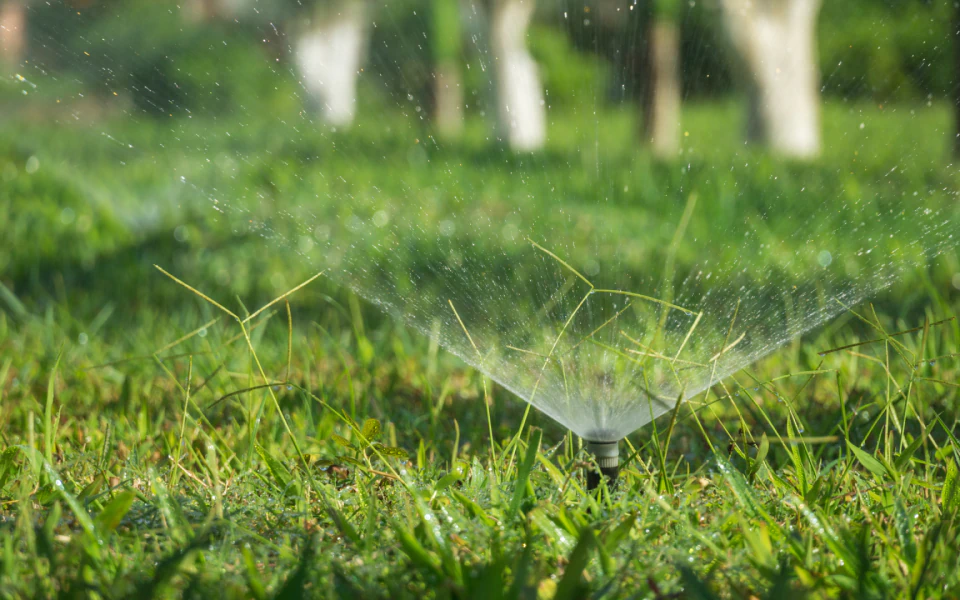
Traditional spray sprinklers apply water over a wide area, much of which evaporates before it reaches plant roots, especially during Virginia’s hot, humid summer afternoons. Wind drift, overspray onto driveways and sidewalks, and runoff on slopes all waste water. A standard sprinkler system for a quarter-acre lawn in Hampton Roads typically uses between 10,000 and 15,000 gallons per month during the growing season.
Drip irrigation delivers water directly to the root zone at a slow, controlled rate, minimizing evaporation and eliminating overspray. The same quarter-acre of landscape watered with drip (focused on beds, shrubs, and trees rather than turf) generally uses 5,000 to 7,500 gallons per month. That’s a 30 to 50 percent reduction in water use, and the savings compound every month you irrigate.
In communities with metered water service (common in parts of York County, Poquoson, and newer developments in Chesapeake), the cost difference is measurable. At current Virginia water rates averaging around $4.50 per 1,000 gallons (including sewer charges), a homeowner using 12,000 gallons monthly with sprinklers pays roughly $54 in water costs. A drip user consuming 6,000 gallons pays about $27. Over a six-month growing season, that’s a savings of $162 per year, or $810 over five years.
For well-water users, the savings show up in lower electric bills (less pump runtime) and extended equipment life. Even if you don’t see a direct water bill, you’re reducing wear on your well pump and pressure tank.
Virginia’s seasonal water restrictions add another layer of financial logic. During drought periods, localities in Hampton Roads have implemented mandatory odd-even watering schedules or outright bans on spray irrigation. Drip systems are often exempt from these restrictions because of their efficiency, meaning your landscape stays healthy while neighbors face brown lawns and potential fines for non-compliance.
Irrigation System Maintenance: Comparing Long-Term Repair Costs
Ongoing maintenance is an often-overlooked cost factor that can tip the financial balance one way or the other, depending on your property and how you use it.
Sprinkler systems face frequent, predictable wear. Spray heads get run over by lawnmowers, cracked by foot traffic, and clogged by grass clippings and dirt. A single broken sprinkler head costs $8 to $15 to replace, but the real expense is accumulated over time. Most homeowners with active lawns replace 3 to 6 heads per year. Valve diaphragms fail, requiring $50 to $100 service calls. Winterization (critical in Virginia to prevent freeze damage) runs $75 to $150 annually if you hire it out. Add a spring start-up inspection, and you’re looking at $150 to $250 per year in routine maintenance.
Drip systems have a different maintenance profile. They don’t break from mowing or foot traffic, but they are vulnerable to clogging from sediment, algae, and mineral buildup, especially in areas with well water or high iron content (common in parts of Mathews and Gloucester counties). Clogged emitters reduce efficiency and create dry spots. Annual flushing and filter cleaning are essential, which you can do yourself or hire out for $100 to $150. Tubing can be chewed by rodents or damaged by landscape edging, though repairs are inexpensive (usually under $20 in materials).
Over five years, a sprinkler system might cost $750 to $1,250 in maintenance and repairs. A drip system typically runs $500 to $750, assuming you stay on top of filter maintenance. The gap isn’t huge, but it favors drip, especially if you’re handy and comfortable doing your own flushing and emitter checks.
One hidden cost: plant replacement. Inefficient watering leads to stressed, diseased, or dead shrubs and perennials. A sprinkler system that oversprays or undersprays garden beds can cost you hundreds in replacement plants over a few years. Drip irrigation’s precision watering keeps plants healthier, reducing that hidden expense.
Choosing the Right Irrigation System Installation for Your Property Type
The most cost-effective irrigation strategy isn’t about picking one system and forcing it across your entire property. It’s about matching the right technology to each zone based on plant type, water needs, and how you use the space.
Sprinkler systems excel for large turf areas. If you have a half-acre lawn that the kids play on or you host backyard gatherings, the uniform coverage and simplicity of spray or rotor heads make sense. Yes, you’ll use more water, but the even distribution keeps grass healthy and playable. For lawns, the ROI calculation favors sprinklers, especially if you’re not on metered water.
Drip irrigation shines in garden beds, around shrubs and trees, and along foundation plantings. These areas don’t need blanket coverage, and the plants benefit from slow, deep watering at the root zone. Drip also works beautifully in vegetable gardens, where precise watering reduces disease and improves yields. If your landscape is heavily planted with ornamentals, native shrubs, or perennials (increasingly common in water-conscious Hampton Roads designs), drip delivers better plant health and lower water bills.
Many homeowners in Virginia Beach, Williamsburg, and Yorktown are moving toward hybrid systems: rotors or spray heads for the lawn, drip lines for everything else. This approach balances upfront cost, water efficiency, and long-term performance. A site-specific assessment helps identify where each technology makes the most financial and horticultural sense.
There’s also the future to consider. Virginia’s climate is shifting toward hotter, drier summers and more variable rainfall. Water rates are rising in many Tidewater municipalities. Drought restrictions are becoming more frequent. Investing in water-efficient irrigation now isn’t just about this year’s utility bill; it’s about protecting yourself from future rate hikes, restrictions, and the cost of replanting a landscape that didn’t survive a dry spell.
If you’re ready to make a smart, site-specific irrigation investment, Irrigation Solutions, LLC provides transparent cost estimates and assessments for both drip and sprinkler installations across Hampton Roads. We’ll walk your property, discuss your goals and budget, and recommend the system (or combination of systems) that delivers the best return for your landscape. Contact us at (804) 832-0435 or visit our contact page to schedule a consultation and start saving water and money.
